Oscar Trelles

Productivity Tip:
 

Understand Busyness vs. Productivity

“A full calendar is not proof of a full life,” says neuroscientist Anne-Laure Le Cunff. “It might just be proof that you never stopped long enough to ask what you’re filling it with.” 

What she’s referring to is the busyness trap – staying constantly active without making real progress. “You can spend hours answering emails, jumping between tasks, and putting out fires, and over time you lose space for reflection and creative thinking,” says Anne-Laure.

What to do? 

  • Track how you spend your time
  • Identify and cut low-value activities for a week
  • Reflect on your progress
  • Get comfortable with stillness (literally sit and do nothing for 10 mins a day – just reflect).


Read more
here and see if you can replace the busy work with more of what matters.

Routine Breakdown
 

Oscar Trelles, Founder of Breathing Flame, Creator of the Reverse Aging Challenge

How a Burnout Survivor Rebuilt His Day for Sustainable Energy

Oscar Trelles

“This routine grew out of burnout and a long process of rebuilding my health,” says Oscar Trelles. “After years in high-pressure work environments, I learned that consistency matters more than intensity, and that balance beats perfection every time.” Oscar says the routine is meant to create rhythm, not pressure. 

The Routine:

  • Wakes around 7:30 am and drinks a large glass of water. “I do not use an alarm. Waking naturally helps me start the day without an artificial stress signal.”
  • Breathwork practice. “On workout days, I do four rounds of Wim Hof Method breathing. On other days I test or develop other breathwork protocols. This is how I regulate my nervous system before engaging with the world.”
  • Meditates. “This helps me transition from internal regulation to outward attention. It is less about clearing the mind and more about grounding.”
  • Coffee as a start-of-day signal. “Around 9, I make a pour-over coffee. I treat it as a deliberate ritual, not just a caffeine fix. It marks the beginning of my workday.”
  • Low-pressure digital scan. “From 9 to 10, I scan email, calendar, and messages. I do not book meetings before then. This protects my mornings from urgency.”
  • Training. “On workout days I train at noon, followed by sauna and steam. Strength work plus heat has been one of the most reliable ways for me to manage stress.” He also walks as much as his schedule allows every day.
  • Time-restricted eating. “I have my first meal at around 3 pm and my last before 9 pm.”
  • Device-free wind down. “By 11 pm, I start powering down. No devices enter my bedroom. Separating work, rest, and sleep environments has been critical for recovery.”


Why it works:

  • Breathwork is calming, and there’s some science to support the Wim Hof Method. One systematic review found that it “may reduce inflammation in healthy and non-healthy participants.” 
  • Regular meditators may enjoy benefits like better sleep, improved memory, and lower blood pressure, to name just a few. 
  • Rituals create entry points into deep work. Research shows small rituals can help you get into the flow state—even a simple coffee ritual!
  • Saunas after workouts have been shown to improve circulation and aid in recovery.
  • Oscar says time-restricted eating “supports digestion, sleep, and mental clarity.” Research agrees it has benefits, though it’s important to check if it’s right for you.


A crucial point Oscar makes about his routine is that it continues to evolve, but the principles stay the same: regulate his nervous system before engaging with work, move regularly without exhausting himself, and protect recovery as carefully as productivity. “Those choices have made the routine sustainable over time, which has mattered far more than discipline or intensity ever did.”


Chris Wilson

Wellness Tip:
 

Start With Intentions, Not Tasks

Here’s a simple way to take control of your day: set a few clear intentions each morning. That way, instead of reacting to everything that comes at you, you’ve already decided what matters most.

There’s some science to this. Research shows that setting clear intentions helps translate goals into action by activating them in your mind and making it easier to stay focused on what matters.

A system like Panda Planner can help turn intention-setting into habit. In the daily section, your Focus is essentially your main intention for the day, and your Priorities turn that into action.

Have you tried setting a daily focus or intention?

Routine Breakdown
 

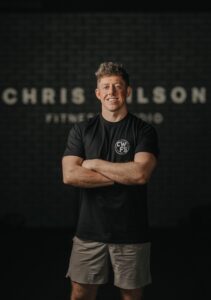
 Chris Wilson, Founder & Director of Chris Wilson Fitness Studio

A Fitness Founder’s Approach to Leading From the Front

Chris-Wilson

The owner of “Australia’s most exclusive fitness studio” says his routine is built around consistency, energy management, and leading from the front. “As a business owner, coach, and father of three, I don’t have the luxury of long, flexible mornings – so my routine is simple, structured, and repeatable.”

The Routine:

  • Early wake up (4-4:30am). “I wake early to create space before the noise. No phone, no emails – just a few quiet moments to get ahead mentally.” Chris usually starts by having breakfast in peace, followed by reading 5-10 pages of a book, then setting his 3 intentions for the day.
  • Team connection and setting the standard. Chris aims to be in the studio early to invest some time in his team, connect with members, and check the small details like music, cleanliness, and energy. “These touchpoints define the experience and culture of our brand.”
  • Focused work blocks. “Midday is reserved for deep work: strategy, growth, and leadership. This is where I focus on building the business, not just operating in it.”
  • Movement, whether that’s strength training, a mobility routine, or a HYROX-style session. “I don’t negotiate with training – it’s part of who I am, not something I try to fit in. It gets me away from my work and gives me a chance to focus on myself and my health.”
  • Wind-down. “Consistency at night sets up consistency in the morning.” He keeps evenings simple, with family time, light dinner, and switching off where possible. “I aim to reduce screen time and get to bed early. Recovery is just as important as performance.”


Why it works:

  • As Chris says, a quiet morning sets the tone for a calm, controlled day rather than a reactive one. Plus, setting intentions aligns your daily actions with your bigger goals.
  • Chris leads by example. As he puts it, “Standards aren’t spoken – they’re seen and felt.”
  • Working in focused blocks helps your brain avoid constant switching and actually get into a deep, productive groove where you learn and get more done.
  • Chris sees being fit not just as a goal, but as part of his identity. This makes the habit more automatic and easier to stick to.
  • Adequate rest is crucial for both physical and mental health.


For Chris, balancing business with fitness is all about walking the walk. “Training sharpens my mindset, boosts energy and reinforces the standards I set. As a leader in fitness, I believe you have to live it.”

Becky May

Productivity Tip:
 

Use Visible Progress Cues

Ah, that feeling of adding a big checkmark to a “done” box. We hardly need to tell you how satisfying it is! 

Research shows that visualizing progress increases motivation and effort. We’re more likely to keep going when we can clearly see how far we’ve come—and the closer we get to our goal, the harder we push (a phenomenon known as the Goal-Gradient Effect).

Here are some things you can try:

  • Tick things off on a physical checklist.
  • Move tasks across columns (To Do → In Progress → Done). Kanban tools are great for this!
  • Use a calendar like this scratch-off habit tracker.
  • Use a simple progress bar to track % done. Use a spreadsheet or even just draw a progress bar and fill it in.
  • Break big tasks into mini-steps so you’re checking things off more frequently.
  • Use color coding (red → yellow → green) to show progress stages.


How do you make progress visible? Let us know what works for you!

Routine Breakdown
 

Becky May, Dietitian & Owner of The Vitality Protocol

How a Dietitian, Business Owner & Mom Starts Her Day

Becky May

Becky May definitely keeps herself busy. On top of running a business, she juggles a full-time job and motherhood—she even manages her son’s football team! Here’s how her routine keeps her energized.

The Routine:

  • Works out every morning, alternating between weights and cardio, with one day reserved for active rest (like a walk or low-intensity stretching).”I choose to move my body early in the morning before anything can distract me or get in my way.”
  • Minimum 5 mins mediation. “I can feel a difference in my mind when I miss this part of my morning routine.”
  • Takes a shower, finishing with 30 seconds of cold water. “This makes me feel so energized and ready to take on the day. I even do this throughout winter.”
  • Coffee in the sunlight. “Taking a moment to slow down and sit with both the sunshine and my coffee sets my mind for the day.”


Why it works:

  • Workouts, as we all know, are good for us (body and mind!). So is incorporating active recovery into your routine, which research suggests may actually be more effective than total rest.
  • Meditation has a bunch of benefits. And yes, 5 minutes is enough to get rewards. 🙌
  • Cold showers might not sound inviting, but they may help boost metabolism, improve circulation, and generally get you alert and moving!
  • Morning sunlight helps regulate circadian rhythms, while small rituals (mmm, coffee) can reduce stress and anxiety. 


“I have so much on my plate that my mornings need to be non-negotiable and set me up for the day,” says Becky. “Otherwise, I don’t know if I would have the mindset or energy I need to accomplish all the things I have to do throughout the day.”

Claudia De Rosa

Wellness Tip:
 

Move Before You Create

If you’ve ever felt like your brain moves better when your body does, you’re not imagining it: movement helps our thoughts flow. 

In this week’s routine, jewelry designer Claudia told us she uses cycling as a mobile studio. No, she’s not setting gems while pedaling down the bike lane. She’s using her 25-mile morning ride to unlock ideas and get her creativity flowing. 

There’s science to this. Aerobic movement (like cycling) increases blood flow to the brain and supports divergent thinking; the kind you need for creativity and problem-solving.

So, if you’re stuck creatively, don’t push harder at your desk. Take a 20–40 min walk, ride, or workout. You might just find it the best way to get unstuck.

Routine Breakdown
 

 Claudia De Rosa, Entrepreneur & Founder of Claudia De Rosa Jewelry

A Jewelry Designer’s Modular Morning Routine

Claudia De Rosa

Claudia De Rosa says her daily routine is structured around presence, creativity, and intentionality—the same principles that guide every piece she designs. “The modularity of my Jewelry Ties and the Magnetika system reflects how I organize my day: each element has purpose, but the sequence is flexible to accommodate inspiration,” she says.

The Routine:

  • Wakes with clarity (6:00 am) – “Each morning, I remind myself why my work matters. This sets the tone for intentional creativity.”
  • Breakfast ritual (6:15 am) – “A mindful, nourishing breakfast fuels both body and mind. This is my first act of self-respect and presence, just as each piece I create carries meaning and care.”
  • Cycling for creativity (7:00 am) – “I ride at least 40 km (25 miles) on my bike. The rhythm, the wind, the movement… it unlocks ideas and perspectives I can’t access at my desk. Cycling is my mobile studio, where modular thinking and design inspiration collide.”
  • Creative session (9:00 am) – “Back from the ride, I sketch, experiment, and plan. Ideas flow freely because my body and mind have already aligned.”
  • Dinner & ritual of calm (7:30 pm) – Her workday ends firmly at 7.30pm, when she has a quiet, healthy dinner. “This signals the shift from creation to restoration.”
  • Reading or film (8:30 pm) – “I close the day with stories that expand perspective, entertain, or inspire. It’s the final layer of the day’s modular structure—intellectual and emotional nourishment before rest.”


Why it works:

  • Claudia grounds her mornings in purpose, and purpose is linked to lower stress and better mental health.
  • Mindful eating helps us connect to our bodies’ hunger and fullness signals and can lead us to make healthier choices. That’s why, as Claudia says, “a mindful, nourishing breakfast fuels both body and mind.”
  • Cycling has a bunch of benefits, including lower cholesterol, more brain power, and of course, stronger legs!
  • Putting a firm boundary on her workday is a smart move. As Claudia puts it: “This creates a container for productivity and protects energy for rest, reflection, and personal life.”


Claudia says that her routine ensures three key things: her creativity flows, she stays resilient, and her personal energy is preserved. To all the creatives out there: how do you keep your creativity flowing day-to-day? 🎨

Dudley Tal Stokes

Productivity Tip:
 

Beat Bedtime Procrastination

There’s a neat little term psychologists use for something a lot of us do without thinking: bedtime procrastination. You go to bed later than you intended, not because of anything urgent, but because you’re scrolling, watching “one more” episode, or pottering around even though you’re tired. 🫩

Maybe it’s the only time that feels like it’s actually yours. Staying up becomes a quiet protest, even though tomorrow‑you is going to pay for it.

A few things to try:

  • Pick a rough “start winding down” time and treat it as a cue, not a rule.
  • Swap late‑night scrolling for one low‑effort calming habit (cup of tea, book, light stretching). 
  • Make distractions slightly less convenient, like charging your phone across the room. 
  • Use a “to‑bed” alarm to help you stay on track without turning your evenings into yet another thing to optimize.


Make it a tiny experiment: see how you feel after a week of getting to bed just a little earlier. Future-you might be pleasantly surprised.
😌

Routine Breakdown
 

Dudley Tal Stokes, Former Four-Time Olympian, Olympic Coach & Entrepreneur

How an Olympic Coach Trains His Mind Before His Body

Dudley Tal Stokes

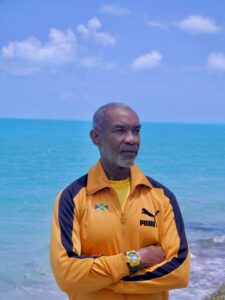
For Dudley Tal Stokes, former Olympic bobsledder and inspiration for the movie Cool Runnings, a successful day begins with meditation and movement. 

The Routine:

  • Meditates. “I begin each day with a meditation routine I call Mental Relaxation and Rehearsal. I aim for a minimum of 15 minutes and an ideal of 1 hour. From a state of deep relaxation, I do a series of visualizations designed to help me reach my peak performance state and model potential situations ahead. Once my mental state is set, I find it easier throughout the day to maintain the correct tension required for the particular situation I encounter.”
  • Works out. “I focus on mobility and control of the body, followed by 15-20 minutes of high-intensity exercise, using body weight and kettlebells. I may do a walk, with or without weights, for 30 minutes. After a cold shower, I’m ready for the day.”
  • Starts his day the night before by getting enough sleep. “I have an alarm for bed at 21:45; I usually get ready by 22:00 and am asleep by 23:00. Before the alarm, I make sure the environment is low-light and add some Green Tea.”


Why it works:

  • Research supports visualization as a performance-enhancing tool! Mental rehearsal lowers anxiety, helps you prepare for situations, and builds confidence and focus. 
  • Mobility work improves joint control and reduces stiffness, while a short burst of high-intensity exercise flips the “on” switch in your brain, boosting focus and mood. 
  • Adding a cold shower boosts alertness even more, thanks to a quick surge of energising hormones.


Notice how Dudley uses a “to-bed” alarm to start intentionally winding down? As we said above, it’s a neat trick for keeping your evenings on track!

Ayanna Abrams

Wellness Tip:
 

Wake to a Melodic Alarm

If your morning alarm is a jarring beep beep beep, you’re doing yourself an injustice. An abrupt sound is more likely to leave you with sleep inertia – that groggy, disoriented feeling you get upon waking. 

You probably already sensed this intuitively, but science backs it up. Research published in PLOS ONE found that people who woke up to melodic alarms reported lower levels of sleep inertia than those who woke up to neutral, non-melodic sounds.

So why not try swapping your blaring beep for Edvard Grieg’s Morning Mood or a similarly melodious tune? Try it tomorrow – and let us know what song you choose.

Routine Breakdown
 

Dr. Ayanna Abrams, PsyD, Founder of Ascension Behavioral Health & Co-founder of Not So Strong

The Therapist-Approved Way to Start Winter Mornings


Ayanna Abrams

Winter mornings ask a lot of us. And when you jump straight from bed to go mode, your nervous system can stay in high alert. That’s why Dr. Ayanna Abrams, PsyD, suggests a “soft start” morning routine – a gentler, more intentional start to the day. “You might also notice better decision-making with less reactivity and even less exhaustion by the end of the day,” she says.

The Routine:

  • Wake up more gradually. Swap a harsh alarm for softer sounds and give yourself an extra 10 minutes so the morning doesn’t start in a rush.
  • Keep your phone out of reach. “Use an actual alarm clock that serves only that purpose, and put your phone across the room or in another room overnight,” says Ayanna.
  • Delay screens altogether. Skip TV, emails, and scrolling first thing to reduce mental and emotional overstimulation. “Emails and texts are others informing you or asking something of you; social media is other people’s lives; news is tons of information,” says Ayanna. “You’re ‘starting’ the day in the lives of others.”
  • Start with a grounding ritual. Take a few slow breaths, stretch gently, or sip water in bed to help your body wake up calmly.
  • Add warmth and nourishment. A warm drink and a simple, balanced breakfast can signal safety and ease to your nervous system.
  • Jot down your thoughts. “Jotting down some morning reflections or a very short to-do list—no more than three items—can help you think about your day without a rush.” This creates direction without overwhelm.


Why it works:

  • Waking up gradually lowers the stress response and helps your nervous system shift out of sleep without a cortisol spike.
  • Delaying screens reduces cognitive overload, giving your brain space to orient before processing external inputs.
  • Grounding rituals send safety signals to the body, easing muscle tension and supporting emotional regulation.
  • Writing things down early helps you get your mind clear, reducing background stress and decision fatigue.


Soft starts are just one part of a broader “soft living” philosophy, which prioritises slowing down and self-nourishment over wealth and hustle culture. “This requires more stern boundaries to protect your time, your energy, how much access people have to you emotionally, and how much you are ‘doing’ vs. ‘being’ day to day,” says Ayanna.

Have you heard of soft living? Here’s a guide that breaks it down if you want to learn more.