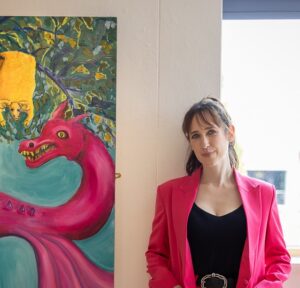
Dario Markovic

Productivity Tip:
 

Start With Your Priorities, Not Other People’s

Many of us start the workday by opening email, Slack, or social media. The problem? Before we’ve decided what matters most, we’re already reacting to everyone else’s requests and priorities. 📩

In this week’s routine, shared by entrepreneur and CEO Dario Markovic, we find a simple alternative: start with your priorities first. For Dario, that’s reviewing business metrics. You might base it on whatever goals and projects you have at that moment.

One easy way to do this is with the daily section of Panda Planner. Before opening your inbox, spend a few minutes identifying your top priorities and what would make the day feel successful. Having them written down makes it easier to stay focused when distractions inevitably arise.

Try it yourself this week: spend the first 10 minutes of your workday setting or reviewing your priorities before checking email or social media. Let us know how it goes for you!

Routine Breakdown
 

Dario Markovic, CEO & Partner at Eric Javits, Entrepreneur & Father

The Morning Routine Behind a $20M E-Commerce Business

Dario Markovic

“I joined Eric Javits, a 35-year-old New York luxury hat brand, in mid-2020 when COVID had pushed it to the brink of bankruptcy,” says Dario Markovic. “I set up the Shopify store from scratch and grew the e-commerce side from around $120K a year to over $20M in five years.

“The routine below is what holds the day together across product, retail expansion, and operations, and what protects family time before the work starts.”

The Routine:

  • Wake up at 7:00 AM. “I used to push earlier wake-ups thinking it would make me more productive. It didn’t. Seven works because the rest of the day is intense enough; I don’t need to fake intensity at 5 AM to prove anything to anyone.”
  • Family time and breakfast. “This is non-negotiable. The first hour of my day belongs to my family, not to the inbox. As an entrepreneur, it’s easy to convince yourself that every minute matters, but the minutes that matter most are the ones at home, before the world starts pulling at you.”
  • Data check. “Once I’m at my desk, the first thing I open is the dashboards: sales from the previous day, conversion rate, ad spend, returns. I run an e-commerce business, so the numbers are the truth. Reading them first sets the tone for what actually needs my attention, instead of letting other people set it for me through email.”
  • Slack. “After the data, I move to Slack. The team is global, so by the time I’m online there’s already context I need to catch up on. I batch this, read everything, respond to what’s blocking someone, defer the rest. Slack is a useful tool, but it’ll eat your whole day if you let it.”
  • No social media in the morning. “I deliberately stay off Instagram, LinkedIn, all of it before lunch. Social media is designed to hijack your attention and reset your priorities to whatever’s trending. I’d rather start the day with my own data and my own decisions than someone else’s content.”


Why it works:

  • Says Dario: “The structure protects two things that are easy to lose as a CEO: family time and decision quality. Family at the start, data before noise, and no social media until I’ve already done the real work. Most of what people call ‘productivity’ is just protecting yourself from distraction long enough to do the few things that actually matter.”


At its core, this routine is about protecting attention. Family comes before work, data comes before messages, and priorities come before distractions. That simple sequence means the day is driven by intention rather than reaction. What do you think of Dario’s routine?

Dr. Stephanie Steele-Wren

Wellness Tip:
 

Try “Work-Life Separation” Instead of Work-Life Balance

A lot of us chase “work-life balance” like it’s something we should be achieving every single day. But in reality, that can end up feeling exhausting in itself! 😮‍💨

“Some days are going to lean heavily toward work, some won’t,” says Dr. Stephanie Steele-Wren, Licensed Psychologist, who shared her morning routine with us below. “What matters more is not sitting in that constant middle ground where you’re kind of working and kind of not, but still feel like you’re always working.”

Instead of trying to perfectly balance your day, Dr. Steele-Wren focuses more on mental separation. “If I’m working, I try to actually focus and get something meaningful done. If I’m off, I try to actually be off.”

There’s real psychology behind this too: research on “psychological detachment” has found that mentally switching off from work is strongly linked to lower stress and better wellbeing. 

Try it yourself this week: focus on creating clearer boundaries between “on” time and “off” time, even if the split isn’t always equal.

Routine Breakdown
 

Dr. Stephanie Steele-Wren, Licensed Psychologist

A Psychologist’s Better Alternative to Work-Life Balance

Dr. Stephanie Steele-Wren

Psychologist Dr. Stephanie Steele-Wren usually wakes at around 6.30-7.00am, without an alarm. “Who really even needs an alarm clock when you have a toddler?” she says. The first thing she does? Avoids her phone. “If I do check it, the day immediately feels like I’m reacting instead of actually choosing what to do.”

The Routine:

  • Starts slowly. “I open the blinds, get the kettle on, and give myself a few quiet minutes before the day starts demanding things from me.”
  • Moves a little. “Movement for me is less about pushing hard and more about staying functional. Gentle stretching or light movement helps keep everything from getting stiff or out of place and makes the rest of the day easier. This is crucial for my Ehlers-Danlos syndrome.”
  • Coffee and thinking time. “This is usually the calmest (and briefest) part of the day. It’s when I can think clearly before things get busy and demanding of me.”
  • Decides what actually matters. “I try to pick a couple of things that would make the day feel like a win. Otherwise it’s easy to stay busy without really making progress, which just isn’t great for my ADHD either.”

\Why it works:

  • Research shows that gentle stretching and movement helps maintain joint range of motion, improves circulation, and prevents us from getting all stiff and creaky!
  • Even a few quiet, interruption-free minutes can help our brains feel less overloaded and make it easier to focus. Research shows constant interruptions and multitasking can quickly drain mental energy.
  • Picking just a couple of priorities can make the day feel a lot less mentally cluttered. Research also shows people with ADHD often do better with fewer decisions.


Overall, Dr. Steele-Wren’s routine isn’t about squeezing in some “perfect” morning. It’s about creating a calmer, steadier start that works with her brain and body instead of against them.

Stacy Baxley

Productivity Tip:
 

Take Meal Planning Off Your Plate

Sick of staring into the fridge at 6pm wondering what to cook tonight? Try using AI as a meal-planning super assistant. 🍲

AI tools like ChatGPT or Perplexity can learn things like:

  • Your family’s favorite meals
  • Dietary goals and nutrition preferences
  • How much time you realistically have on weeknights
  • What ingredients you already buy
  • Prep tasks you can batch ahead on Sundays


The result? Fewer last-minute decisions, less stress at dinnertime, and more mental energy for everything else! Have you tried using AI for recipe suggestions and meal planning?

Routine Breakdown
 

Stacy Baxley, Personal Growth Coach

The 5-Minute Super Routine of a Personal Growth Coach

Stacy Baxley

“As a full-time high school career development coordinator and personal growth coach, I don’t have the luxury of long, ideal morning routines,” says Stacy Baxley. “My days are full and often unpredictable, which is exactly why I needed something simple and sustainable. After years of trying to follow routines that looked good on paper but didn’t fit my real life, I realized the issue wasn’t discipline: it was misalignment.”

Stacy created a 5-minute daily intentions practice that she now teaches to clients because it’s simple, repeatable, and built for real life—not perfect conditions.

The Routine:

  • Decides who she’s becoming today (identity focus). “Each morning, I choose a word or identity—like calm, focused, or intentional—that represents how I want to show up that day. This becomes my anchor for every decision I make. I know that my actions follow my identity—so it’s important to me to choose who I’m going to be before I decide what I’m going to do.”
  • Identifies her top 3 priorities. “Instead of overwhelming myself with a long list, I identify three ‘most valuable priorities’—the actions that will create the biggest impact. Over time, this has helped me realize that overwhelm wasn’t the problem, clarity was.”
  • Chooses one thought that supports her (affirmation). I write one simple, supportive thought that aligns with how I want to show up. This helps interrupt negative thinking patterns before they take over. It also reinforces the idea that ultimately, my actions are a result of my thoughts.
  • Reconnects throughout the day. “I revisit my notecard briefly—usually between tasks or on a short walk—to realign my actions with my intentions. This isn’t a one-and-done routine; it’s a tool I return to so I can lead my day instead of reacting to it.”


Why it works:

  • “This routine works because it shifts the focus from doing more to becoming more. It removes decision fatigue, creates clarity, and builds consistency through small, intentional actions,” explains Stacy. We agree, and that’s why focus, priorities, and affirmation are all part of the daily section of Panda Planner: they’re all powerful ways to keep your day on track.


Stacy adds that she may not complete everything perfectly, but she always follows through on who she decided to be. “And that’s what builds real momentum over time,” she says. “5 minutes may not seem like much, but these 5 focused minutes allow me to prioritize what’s important to me before prioritizing what is important to others.”

Rebecca Hopwood

Wellness Tip:
 

Don’t Overlook Your Indoor Air

Americans spend around 90% of their time indoors, and according to the EPA, indoor air can sometimes contain pollutant levels 2–5 times higher than outdoor air! 😷

Here are some things you can do:

  • Open the windows for 10–15 minutes a day to let stale air out
  • Run an air purifier in bedrooms or the rooms you spend the most time in
  • Keep on top of dust, especially in rugs, couches, curtains, and bedding
  • Go easy on heavily fragranced sprays, candles, and cleaning products
  • Use extractor fans or open a window while cooking or showering 


And if you’ve heard that houseplants are miracle air purifiers… the research doesn’t quite back that up in real-world homes. Sorry. But hey, that doesn’t mean you shouldn’t fill your space with greenery! Plants do boost mood and make the room feel calmer and more inviting. 🪴
🥰

Here’s a handy checklist for improving air quality indoors, and more info on ventilation from the EPA.

Routine Breakdown
 

Rebecca Hopwood, Founder and Director of Youbee Media and The Hive Academy & Mother

Why This Founder Starts Her Day With Coffee + Candy Crush

Rebecca Hopwood

“My routine is simple and realistic, and it’s evolved around creating mental space before work takes over,” says Rebecca Hopwood, an entrepreneur juggling business and motherhood.

The Routine:

  • Early dog walk (20–30 minutes, no phone). “Up before anyone else, this is fresh air and my time to get some steps in. It forces me to breathe, move, and wake up properly before the noise of the day begins.”
  • Strong coffee and Candy Crush. “Ok, bear with me on this, as I know it sounds odd, but playing a bit of Candy Crush genuinely helps me switch off. My work is digital and social-heavy, so this is stress-free swiping with no comparison, no emails and no demands.”
  • Get ready for the day with a list. “I scan emails first to see what’s come in overnight, then I write my list from there. Anything urgent gets flagged, ongoing tasks get carried forward, and I know exactly what needs my attention before the day takes off.”
  • Evening boundary: switching roles, not just locations. “I close my laptop at 5pm and drive home with music to reset. This time in the car is the line between work and being present as a mum and wife. Limiting social plans and protecting evenings gives me space for Pilates or swimming without feeling like I’m stealing time from my family.”

Why it works:

  • Morning light exposure and light movement help regulate your circadian rhythm and improve alertness.
  • Writing tasks down helps “offload” them from your brain, reducing the mental distraction caused by unfinished tasks and improving focus. 
  • Simple games like Candy Crush may actually provide a quick mental reset. One study found that casual video games may help reduce stress and improve mood after demanding tasks.
  • Research on “psychological detachment” shows that mentally switching off from work is linked to lower burnout and better wellbeing. Small transition rituals help create a clearer boundary between work mode and home life.


Rebecca calls her end-of-day reset a “
non-negotiable habit”. Do you have a ritual for switching out of work mode?

Molly Sims

Productivity Tip:
 

Dress for Productivity

This week’s productivity tip comes from Molly Sims (below), who says she likes to “dress for New York” even while living in LA because it makes her feel more productive. 

Can your outfit really help you get stuff done? 🤔

Quite possibly! Psychologists even have a term for it: “enclothed cognition.” It’s the idea that what we wear may influence how we think and perform. The research isn’t 100% definitive, but several studies suggest clothing can subtly influence our confidence, focus, and mindset.

You’ve probably experienced this before. So, regardless of the science, the best way to know if the effect is real is to experiment with it yourself. Which clothes make you feel bolder, calmer, more creative, or more capable?

Routine Breakdown
 

 Molly Sims, Model, Actress, Mom & Beauty Brand Founder

The Routine of a Supermodel-Supermom

Molly Sims

Molly Sims, supermodel/supermom and founder of beauty brand YSE, says she usually wakes up at 6:15 am – about 45 minutes before her three kids do. Once everyone is up, it’s straight into mediating their sibling bickering and getting them ready for school. Then she:

The Routine:

  • Checks her calendar. “I panic-check my calendar to make sure I am not forgetting anything.”
  • Moves. She switches between pilates with Erika Rae from Forma Pilates and cardio workouts.
  • Has coffee and breakfast. She loves egg white muffins or a Vanilla Protein Blueberry Smoothie.
  • Gets dressed for the office. “When I’m not being lazy, I love to dress up for work. I love to ‘dress for New York’ even though I live in LA. Helps me feel more productive.”
  • Powers through all her meetings, then tries to pick up the kids from school at 3pm to take them to their sports practices. 
  • Family time. They “try to eat something for dinner in between all the chaos” and binge-watch a cooking show together.


Why it works:


Do you try to incorporate some family time into your routine daily?

Oscar Trelles

Productivity Tip:
 

Understand Busyness vs. Productivity

“A full calendar is not proof of a full life,” says neuroscientist Anne-Laure Le Cunff. “It might just be proof that you never stopped long enough to ask what you’re filling it with.” 

What she’s referring to is the busyness trap – staying constantly active without making real progress. “You can spend hours answering emails, jumping between tasks, and putting out fires, and over time you lose space for reflection and creative thinking,” says Anne-Laure.

What to do? 

  • Track how you spend your time
  • Identify and cut low-value activities for a week
  • Reflect on your progress
  • Get comfortable with stillness (literally sit and do nothing for 10 mins a day – just reflect).


Read more
here and see if you can replace the busy work with more of what matters.

Routine Breakdown
 

Oscar Trelles, Founder of Breathing Flame, Creator of the Reverse Aging Challenge

How a Burnout Survivor Rebuilt His Day for Sustainable Energy

Oscar Trelles

“This routine grew out of burnout and a long process of rebuilding my health,” says Oscar Trelles. “After years in high-pressure work environments, I learned that consistency matters more than intensity, and that balance beats perfection every time.” Oscar says the routine is meant to create rhythm, not pressure. 

The Routine:

  • Wakes around 7:30 am and drinks a large glass of water. “I do not use an alarm. Waking naturally helps me start the day without an artificial stress signal.”
  • Breathwork practice. “On workout days, I do four rounds of Wim Hof Method breathing. On other days I test or develop other breathwork protocols. This is how I regulate my nervous system before engaging with the world.”
  • Meditates. “This helps me transition from internal regulation to outward attention. It is less about clearing the mind and more about grounding.”
  • Coffee as a start-of-day signal. “Around 9, I make a pour-over coffee. I treat it as a deliberate ritual, not just a caffeine fix. It marks the beginning of my workday.”
  • Low-pressure digital scan. “From 9 to 10, I scan email, calendar, and messages. I do not book meetings before then. This protects my mornings from urgency.”
  • Training. “On workout days I train at noon, followed by sauna and steam. Strength work plus heat has been one of the most reliable ways for me to manage stress.” He also walks as much as his schedule allows every day.
  • Time-restricted eating. “I have my first meal at around 3 pm and my last before 9 pm.”
  • Device-free wind down. “By 11 pm, I start powering down. No devices enter my bedroom. Separating work, rest, and sleep environments has been critical for recovery.”


Why it works:

  • Breathwork is calming, and there’s some science to support the Wim Hof Method. One systematic review found that it “may reduce inflammation in healthy and non-healthy participants.” 
  • Regular meditators may enjoy benefits like better sleep, improved memory, and lower blood pressure, to name just a few. 
  • Rituals create entry points into deep work. Research shows small rituals can help you get into the flow state—even a simple coffee ritual!
  • Saunas after workouts have been shown to improve circulation and aid in recovery.
  • Oscar says time-restricted eating “supports digestion, sleep, and mental clarity.” Research agrees it has benefits, though it’s important to check if it’s right for you.


A crucial point Oscar makes about his routine is that it continues to evolve, but the principles stay the same: regulate his nervous system before engaging with work, move regularly without exhausting himself, and protect recovery as carefully as productivity. “Those choices have made the routine sustainable over time, which has mattered far more than discipline or intensity ever did.”