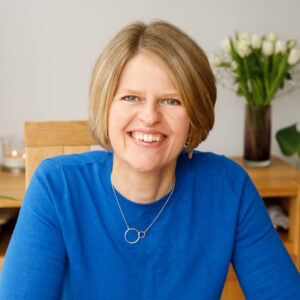
Dr. Stephanie Steele-Wren

Wellness Tip:
 

Try “Work-Life Separation” Instead of Work-Life Balance

A lot of us chase “work-life balance” like it’s something we should be achieving every single day. But in reality, that can end up feeling exhausting in itself! 😮‍💨

“Some days are going to lean heavily toward work, some won’t,” says Dr. Stephanie Steele-Wren, Licensed Psychologist, who shared her morning routine with us below. “What matters more is not sitting in that constant middle ground where you’re kind of working and kind of not, but still feel like you’re always working.”

Instead of trying to perfectly balance your day, Dr. Steele-Wren focuses more on mental separation. “If I’m working, I try to actually focus and get something meaningful done. If I’m off, I try to actually be off.”

There’s real psychology behind this too: research on “psychological detachment” has found that mentally switching off from work is strongly linked to lower stress and better wellbeing. 

Try it yourself this week: focus on creating clearer boundaries between “on” time and “off” time, even if the split isn’t always equal.

Routine Breakdown
 

Dr. Stephanie Steele-Wren, Licensed Psychologist

A Psychologist’s Better Alternative to Work-Life Balance

Dr. Stephanie Steele-Wren

Psychologist Dr. Stephanie Steele-Wren usually wakes at around 6.30-7.00am, without an alarm. “Who really even needs an alarm clock when you have a toddler?” she says. The first thing she does? Avoids her phone. “If I do check it, the day immediately feels like I’m reacting instead of actually choosing what to do.”

The Routine:

  • Starts slowly. “I open the blinds, get the kettle on, and give myself a few quiet minutes before the day starts demanding things from me.”
  • Moves a little. “Movement for me is less about pushing hard and more about staying functional. Gentle stretching or light movement helps keep everything from getting stiff or out of place and makes the rest of the day easier. This is crucial for my Ehlers-Danlos syndrome.”
  • Coffee and thinking time. “This is usually the calmest (and briefest) part of the day. It’s when I can think clearly before things get busy and demanding of me.”
  • Decides what actually matters. “I try to pick a couple of things that would make the day feel like a win. Otherwise it’s easy to stay busy without really making progress, which just isn’t great for my ADHD either.”

\Why it works:

  • Research shows that gentle stretching and movement helps maintain joint range of motion, improves circulation, and prevents us from getting all stiff and creaky!
  • Even a few quiet, interruption-free minutes can help our brains feel less overloaded and make it easier to focus. Research shows constant interruptions and multitasking can quickly drain mental energy.
  • Picking just a couple of priorities can make the day feel a lot less mentally cluttered. Research also shows people with ADHD often do better with fewer decisions.


Overall, Dr. Steele-Wren’s routine isn’t about squeezing in some “perfect” morning. It’s about creating a calmer, steadier start that works with her brain and body instead of against them.

Stacy Baxley

Productivity Tip:
 

Take Meal Planning Off Your Plate

Sick of staring into the fridge at 6pm wondering what to cook tonight? Try using AI as a meal-planning super assistant. 🍲

AI tools like ChatGPT or Perplexity can learn things like:

  • Your family’s favorite meals
  • Dietary goals and nutrition preferences
  • How much time you realistically have on weeknights
  • What ingredients you already buy
  • Prep tasks you can batch ahead on Sundays


The result? Fewer last-minute decisions, less stress at dinnertime, and more mental energy for everything else! Have you tried using AI for recipe suggestions and meal planning?

Routine Breakdown
 

Stacy Baxley, Personal Growth Coach

The 5-Minute Super Routine of a Personal Growth Coach

Stacy Baxley

“As a full-time high school career development coordinator and personal growth coach, I don’t have the luxury of long, ideal morning routines,” says Stacy Baxley. “My days are full and often unpredictable, which is exactly why I needed something simple and sustainable. After years of trying to follow routines that looked good on paper but didn’t fit my real life, I realized the issue wasn’t discipline: it was misalignment.”

Stacy created a 5-minute daily intentions practice that she now teaches to clients because it’s simple, repeatable, and built for real life—not perfect conditions.

The Routine:

  • Decides who she’s becoming today (identity focus). “Each morning, I choose a word or identity—like calm, focused, or intentional—that represents how I want to show up that day. This becomes my anchor for every decision I make. I know that my actions follow my identity—so it’s important to me to choose who I’m going to be before I decide what I’m going to do.”
  • Identifies her top 3 priorities. “Instead of overwhelming myself with a long list, I identify three ‘most valuable priorities’—the actions that will create the biggest impact. Over time, this has helped me realize that overwhelm wasn’t the problem, clarity was.”
  • Chooses one thought that supports her (affirmation). I write one simple, supportive thought that aligns with how I want to show up. This helps interrupt negative thinking patterns before they take over. It also reinforces the idea that ultimately, my actions are a result of my thoughts.
  • Reconnects throughout the day. “I revisit my notecard briefly—usually between tasks or on a short walk—to realign my actions with my intentions. This isn’t a one-and-done routine; it’s a tool I return to so I can lead my day instead of reacting to it.”


Why it works:

  • “This routine works because it shifts the focus from doing more to becoming more. It removes decision fatigue, creates clarity, and builds consistency through small, intentional actions,” explains Stacy. We agree, and that’s why focus, priorities, and affirmation are all part of the daily section of Panda Planner: they’re all powerful ways to keep your day on track.


Stacy adds that she may not complete everything perfectly, but she always follows through on who she decided to be. “And that’s what builds real momentum over time,” she says. “5 minutes may not seem like much, but these 5 focused minutes allow me to prioritize what’s important to me before prioritizing what is important to others.”

Dudley Tal Stokes

Productivity Tip:
 

Beat Bedtime Procrastination

There’s a neat little term psychologists use for something a lot of us do without thinking: bedtime procrastination. You go to bed later than you intended, not because of anything urgent, but because you’re scrolling, watching “one more” episode, or pottering around even though you’re tired. 🫩

Maybe it’s the only time that feels like it’s actually yours. Staying up becomes a quiet protest, even though tomorrow‑you is going to pay for it.

A few things to try:

  • Pick a rough “start winding down” time and treat it as a cue, not a rule.
  • Swap late‑night scrolling for one low‑effort calming habit (cup of tea, book, light stretching). 
  • Make distractions slightly less convenient, like charging your phone across the room. 
  • Use a “to‑bed” alarm to help you stay on track without turning your evenings into yet another thing to optimize.


Make it a tiny experiment: see how you feel after a week of getting to bed just a little earlier. Future-you might be pleasantly surprised.
😌

Routine Breakdown
 

Dudley Tal Stokes, Former Four-Time Olympian, Olympic Coach & Entrepreneur

How an Olympic Coach Trains His Mind Before His Body

Dudley Tal Stokes

For Dudley Tal Stokes, former Olympic bobsledder and inspiration for the movie Cool Runnings, a successful day begins with meditation and movement. 

The Routine:

  • Meditates. “I begin each day with a meditation routine I call Mental Relaxation and Rehearsal. I aim for a minimum of 15 minutes and an ideal of 1 hour. From a state of deep relaxation, I do a series of visualizations designed to help me reach my peak performance state and model potential situations ahead. Once my mental state is set, I find it easier throughout the day to maintain the correct tension required for the particular situation I encounter.”
  • Works out. “I focus on mobility and control of the body, followed by 15-20 minutes of high-intensity exercise, using body weight and kettlebells. I may do a walk, with or without weights, for 30 minutes. After a cold shower, I’m ready for the day.”
  • Starts his day the night before by getting enough sleep. “I have an alarm for bed at 21:45; I usually get ready by 22:00 and am asleep by 23:00. Before the alarm, I make sure the environment is low-light and add some Green Tea.”


Why it works:

  • Research supports visualization as a performance-enhancing tool! Mental rehearsal lowers anxiety, helps you prepare for situations, and builds confidence and focus. 
  • Mobility work improves joint control and reduces stiffness, while a short burst of high-intensity exercise flips the “on” switch in your brain, boosting focus and mood. 
  • Adding a cold shower boosts alertness even more, thanks to a quick surge of energising hormones.


Notice how Dudley uses a “to-bed” alarm to start intentionally winding down? As we said above, it’s a neat trick for keeping your evenings on track!

Ayanna Abrams

Wellness Tip:
 

Wake to a Melodic Alarm

If your morning alarm is a jarring beep beep beep, you’re doing yourself an injustice. An abrupt sound is more likely to leave you with sleep inertia – that groggy, disoriented feeling you get upon waking. 

You probably already sensed this intuitively, but science backs it up. Research published in PLOS ONE found that people who woke up to melodic alarms reported lower levels of sleep inertia than those who woke up to neutral, non-melodic sounds.

So why not try swapping your blaring beep for Edvard Grieg’s Morning Mood or a similarly melodious tune? Try it tomorrow – and let us know what song you choose.

Routine Breakdown
 

Dr. Ayanna Abrams, PsyD, Founder of Ascension Behavioral Health & Co-founder of Not So Strong

The Therapist-Approved Way to Start Winter Mornings


Ayanna Abrams

Winter mornings ask a lot of us. And when you jump straight from bed to go mode, your nervous system can stay in high alert. That’s why Dr. Ayanna Abrams, PsyD, suggests a “soft start” morning routine – a gentler, more intentional start to the day. “You might also notice better decision-making with less reactivity and even less exhaustion by the end of the day,” she says.

The Routine:

  • Wake up more gradually. Swap a harsh alarm for softer sounds and give yourself an extra 10 minutes so the morning doesn’t start in a rush.
  • Keep your phone out of reach. “Use an actual alarm clock that serves only that purpose, and put your phone across the room or in another room overnight,” says Ayanna.
  • Delay screens altogether. Skip TV, emails, and scrolling first thing to reduce mental and emotional overstimulation. “Emails and texts are others informing you or asking something of you; social media is other people’s lives; news is tons of information,” says Ayanna. “You’re ‘starting’ the day in the lives of others.”
  • Start with a grounding ritual. Take a few slow breaths, stretch gently, or sip water in bed to help your body wake up calmly.
  • Add warmth and nourishment. A warm drink and a simple, balanced breakfast can signal safety and ease to your nervous system.
  • Jot down your thoughts. “Jotting down some morning reflections or a very short to-do list—no more than three items—can help you think about your day without a rush.” This creates direction without overwhelm.


Why it works:

  • Waking up gradually lowers the stress response and helps your nervous system shift out of sleep without a cortisol spike.
  • Delaying screens reduces cognitive overload, giving your brain space to orient before processing external inputs.
  • Grounding rituals send safety signals to the body, easing muscle tension and supporting emotional regulation.
  • Writing things down early helps you get your mind clear, reducing background stress and decision fatigue.


Soft starts are just one part of a broader “soft living” philosophy, which prioritises slowing down and self-nourishment over wealth and hustle culture. “This requires more stern boundaries to protect your time, your energy, how much access people have to you emotionally, and how much you are ‘doing’ vs. ‘being’ day to day,” says Ayanna.

Have you heard of soft living? Here’s a guide that breaks it down if you want to learn more.

Matthias Frank

Productivity Tip:
 

Make an End-of-Year Done List

Before you rush to plan the year ahead, try something different: write down what you already accomplished this past year. Big goals, small wins, non-linear progress, lessons learned: it all counts! We often overlook things we’d happily celebrate in someone else.

Research shows that tracking progress boosts motivation more than setting new goals alone. Harvard Business School calls this the Progress Principle: noticing what you’ve achieved (even tiny steps) helps you keep that forward momentum.

So before you start making fresh plans, give yourself credit. Take 10 minutes, make a coffee, and write down your wins of 2025, big and small.

Routine Breakdown
 

Matthias Frank, Notion Consultant, Ambassador and Speaker

A Morning Routine That Prioritizes Process Over Perfection

Matthias Frank

Matthias Frank acknowledges that his morning routine doesn’t always go to plan: “Good habits are not a set-it-and-forget-it kind of thing. It’s a continuous process.” That’s why, when he starts to slip, he reminds himself of his ideal routine and why it matters. 

The Routine:

  • Wakes up. “I’m 100% a morning person. My most productive time is from 30 minutes after I wake up to 3 hours later when I start getting hungry for lunch. If I need to get something done, it has to happen in that time window.”
  • Drinks a big glass of water.
  • Does some super simple morning stretches: “rolling my neck and shoulders, mobilising my hips and knees and helping my lower back face the day.”
  • Brushes his teeth and washes his face.
  • Takes athletic greens.
  • Meditates for 10 minutes.
  • Journals a few paragraphs (or just one).
  • Sits at his desk and works for 25 minutes on his blog.

Why it works:

  • Matthias’ routine is less about the steps themselves and more about the habits and processes behind them. He’s all about doing what fits best with his individual strengths, like jumping into work soon after waking and keeping a schedule that’s sustainable. He also includes a few evidence-based activities like meditation and journaling to start the day on the right foot.


“Just as important as all the things I do DO first thing in the morning is the one thing I try not to: check my phone,” says Matthias. “Whether or not I check my phone has an outsized impact on my morning.” 

If you’re used to checking your phone first thing, Matthias suggests an experiment: “For the next 2-3 days, start your day without looking at your phone. Instead, sit for 10 minutes and meditate.” After three days of no phone, switch things around and check your phone first. “For me, the difference is stunning,” says Matthias. What effect does it have on your day?

Michael Easter

Productivity Tip:
 

Buy Gear, Not Stuff

“We live in a world where it’s easy to accumulate stuff,” says Michael Easter, whose routine is featured below. He suggests an alternative: frame your purchases in terms of gear, not stuff. ‘

“Stuff is a possession for the sake of it,” says Michael. “Gear has a clear purpose of helping us achieve a higher purpose.”

With holiday shopping, discounts and deals around every corner, and a long list of gifts to buy (for ourselves and others!), there’s no better time to put this into practice. Making considered purchases keeps our budgets in check, and it’s better for the environment, too. 

So, when all those shiny new gadgets are vying for your attention this season, check your framing. Is it stuff you don’t need, or gear that will actually enhance your life?

Bonus tip from Michael: “Buy items only in person. If it’s online-only, put it in your cart and wait 72 hours. You’ll probably realize you don’t need it.”

Routine Breakdown
 

Michael Easter, Author

A Best-Selling Author’s Routine of Tea, Poetry, and Walks in the Desert 


Michael Easter

Michael Easter is a NY Times best-selling author who thinks about “human health, wellness, and what it means to live well today.” Rather than get caught up trying to pull every “optimization lever”, he says everything he does in the morning has to feed back into his ultimate goal of writing words that change people’s behavior for the better. 

The Routine:

  • 6.30 am: Caffeine ritual: black tea. “I started drinking tea simply because I was drinking way too much coffee. I also found that tea was a little better on my stomach.” He uses a French press to limit microplastic consumption. 
  • 6:45: Writing session. “There’s nothing magical about the mornings. You just need protected time where you’re focused on that one big goal.” He keeps his desk clear as he finds clutter distracting. 
  • 8:45: Walks his dog, following up mental work with something physical. “There’s tons of research around how time in nature is good for mental health and for creative thinking. I usually get my best ideas out on walks.”
  • 9:45: Breakfast. “If I start with a healthy breakfast, that’s one win for the day.”
  • 10:00: Does 5 minutes of mobility movements to offset the damage caused by too much sitting. “Humans are not designed to sit at desks all day.”
  • 10:05: Reads poetry. “It forces my brain to think about different ways to use words and language that’s more creative and enlivening.” His favorite poet is Mary Oliver.


Why it works:

  • Black tea in moderation offers some great benefits. It’s rich in antioxidants that support heart health, improve focus, and may reduce chronic disease risk.
  • Jumping straight into his most important work at a consistent time each day helps Michael make progress toward his goals. And yes: clutter really can overwhelm your brain and reduce focus, so a clean desk makes a difference!
  • Yep, spending time in nature really is all that.
  • Mobility training is important—and the best part is, you can do it in just a few minutes.
  • Poetry doesn’t just open up new worlds of language and expression; it can even boost wellness and act as a form of therapy.


What do you think of Michael’s routine? Do you have some protected time where you’re “focused on that one big goal”?